



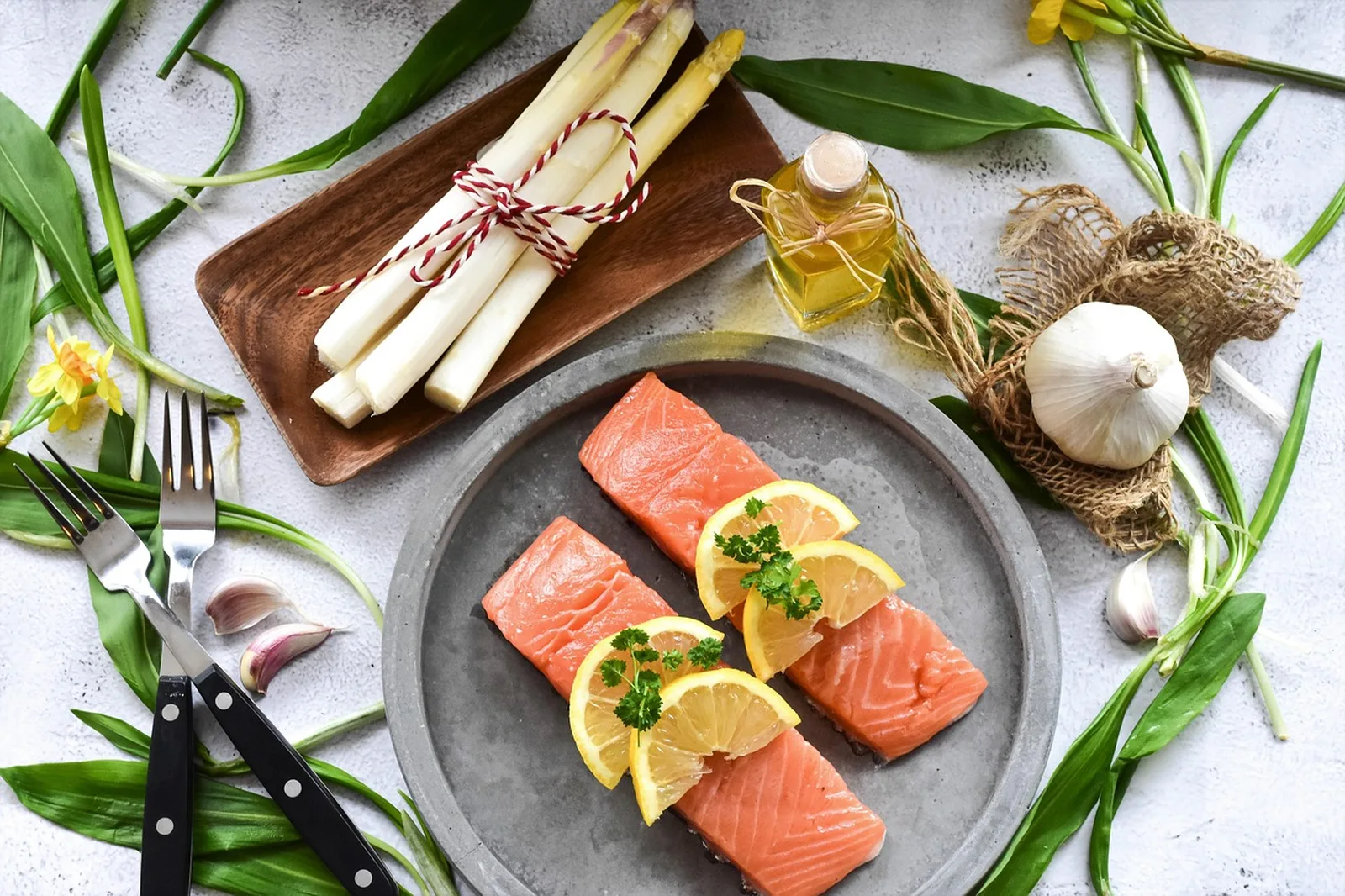
Silent chronic inflammation. The term sounds like a contradiction, for inflammation we associate with redness, swelling, pain and heat. That is acute inflammation, the kind you see and that heals. Silent inflammation is different: it burns for years on a low flame, without us feeling it. The immune system stays permanently activated, messenger substances like interleukin-6 and TNF-alpha circulate slightly elevated, the C-reactive protein (CRP) is measurable, but not dramatic. No alarm, only a quiet background noise. It is precisely this noise that has occupied research for decades, and it is precisely here that nutrition comes in.
The honest framing up front: anti-inflammatory eating has real evidence for low-grade inflammation. That is documented, that is no hocus-pocus. But it heals no disease. It replaces no medical treatment. It is one building block, one piece of the puzzle among many. Whoever promises you the opposite is doing marketing, not education. This distinction runs through everything written here.
Creation logic: a built-in answer to a built-in problem
That foods contain anti-inflammatory substances is no coincidence and no modern discovery. Creation placed them in there long before a laboratory could name them. Polyphenols in olive oil, omega-3 fatty acids in fish, allicin in garlic, quercetin in the onion: these are not later additions, but the original equipment. The body is designed to receive and use these substances. They are part of a self-regulating system that arises, passes, cleanses itself and renews. The cleaning crew was always part of the plan.
Studies can measure and confirm this today. But they are the confirmation, not the authority. Thousands of years of experience plus what is laid down in creation come first. Oleocanthal in olive oil acts on the same enzymes as ibuprofen (COX-1 and COX-2), that is a measured effect, not folk belief. That the Bible mentions olive oil on almost every second page, from the anointing of kings to the supply of the lamps in the temple, is no coincidence. It was the central fat, the daily food, the medicine of antiquity. Modern science is only catching up with what creation had long built in.
The biblical foods, honestly assessed
The following table lists the anti-inflammatory foods that are deeply rooted in the Bible. Each is named, its active substances are stated, and the evidence is honestly distinguished: well documented means several controlled studies in humans plus an understood mechanism of action. Plausible and folk knowledge means traditional use over centuries with limited or inconsistent study data. Both are legitimate, only not to be treated as the same.
| Food | Anti-inflammatory substances | Evidence | Biblical reference |
|---|---|---|---|
| Olive oil | Oleocanthal, oleuropein, hydroxytyrosol | Well documented (COX inhibition comparable to ibuprofen, several human studies) | Exodus 27:20; Deuteronomy 8:8; Micah 6:15 |
| Fatty fish | EPA, DHA (omega-3); SPM (Specialized Pro-resolving Mediators) | Well documented (omega-3 to inflammation-resolving messengers, many RCTs) | Matthew 14:17; Luke 24:42; John 21:9 |
| Garlic | Allicin, diallyl disulfide, S-allylcysteine | Moderately documented (inhibits NF-kB; several human studies on CRP, inconsistent) | Numbers 11:5 |
| Onion | Quercetin, kaempferol, sulfur compounds | Well documented (quercetin as COX-2 inhibitor, several intervention studies) | Numbers 11:5 |
| Pomegranate | Punicalagin, ellagic acid, anthocyanins | Well documented (strong antioxidant effect, several human studies) | Exodus 28:33; Song of Songs 4:3; Deuteronomy 8:8 |
| Nuts and seeds | Vitamin E, ALA (omega-3), magnesium, polyphenols | Well documented (cohort studies consistently show lower CRP values) | Genesis 43:11; Numbers 17:23 |
| Honey | Flavonoids, phenolic acids, glucose oxidase | Plausible and folk knowledge (wound healing documented, systemic effects more weakly documented) | Proverbs 24:13; Deuteronomy 8:8; 1 Samuel 14:25 |
| Fig | Polyphenols, fiber, flavonoids | Plausible and folk knowledge (traditional remedy, limited human studies) | Deuteronomy 8:8; Genesis 3:7; Jeremiah 24 |
| Grape | Resveratrol, anthocyanins, procyanidins, quercetin | Resveratrol disputed (low bioavailability); anthocyanins well documented | Genesis 9:20; Deuteronomy 8:8; John 15:1 |
| Coriander | Linalool, essential oils, flavonoids | Plausible and folk knowledge (traditional use, limited human studies) | Exodus 16:31; Numbers 11:7 |
| Mint | Menthol, rosmarinic acid, flavonoids | Plausible and folk knowledge (rosmarinic acid confirmed in vitro, human studies thin) | Matthew 23:23; Luke 11:42 |
What the table does not show: bioavailability and limits
Contained is not the same as absorbed. That is the most common error with such tables. Polyphenols from olive oil have a measurable bioavailability, the body can use them. Resveratrol from grapes, by contrast, is quickly broken down in the gut and reaches the blood only in tiny amounts. What works in the test tube does not automatically work in the human. On top of that come individual differences: gut flora, metabolism, genetics. Your body is no average.
The food matrix also decides. Whole olives act differently than refined oil. The garlic has to be cut or crushed for allicin to form. Regional honey with its local pollen is something different than industrially heated blended honey. The principle stays: the closer to the original state built by creation, the more of what works actually arrives. And even then: do not overdo it. A liter of olive oil and three bulbs of garlic a day make nothing better, only the stomach sour. Measure belongs to the creation order.
Freedom, not law
Now the decisive point for anyone who takes the Bible seriously: none of these foods is a commandment. The New Covenant does not simply set up a new food list, this time with anti-inflammatory foods instead of forbidden ones. Christ made it clear: not the food defiles, but the heart (Mark 7:15). Peter was told three times: what God has made clean, do not call unclean (Acts 10:15). Paul writes unmistakably: everything God created is good and nothing is to be rejected if it is received with thanksgiving (1 Timothy 4:4).
The foods named here are wisdom, not law. Invitation, not demand. Whoever eats them does his body good and moves close to the original order. Whoever does not eat them misses nothing and earns nothing. The Agape love of the Father does not hang on your meal plan. The body is a gift, and to understand it, to deal wisely with it, is part of self-responsibility and good stewardship. But the measure is the freedom to which Christ has freed us (Galatians 5:1), not the narrowness of a new checklist. No one eats their way into God’s nearness, and no one eats their way out. Not even with three spoons of olive oil a day.
Related: