



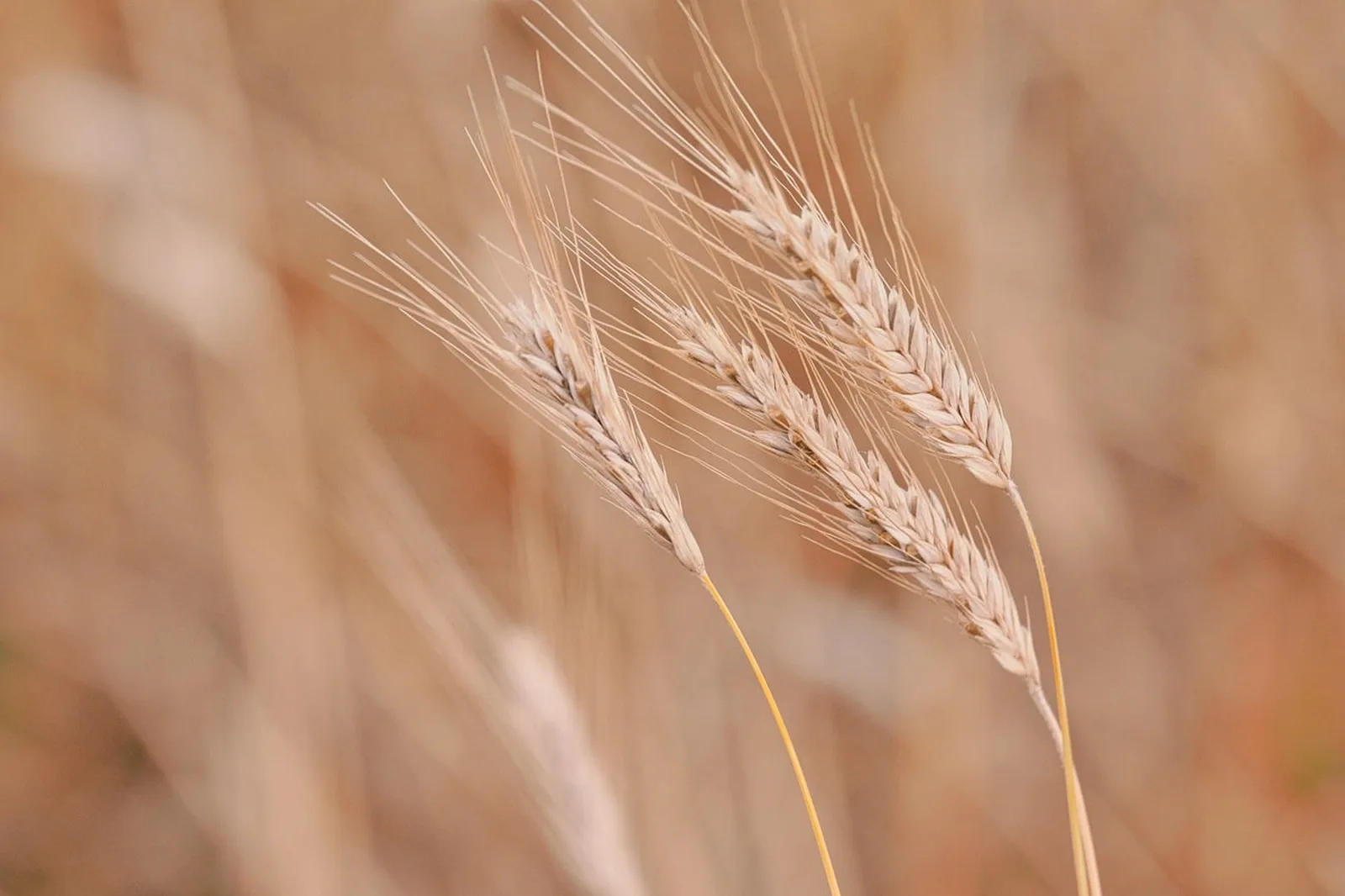
A grain of wheat is a whole seed. A complete package of life from which a new plant can grow. White flour keeps about a third of that, the pure starch, and throws away the part that lives. That is not a cooking detail. It is the same pattern as everywhere in modern food: you remove exactly what creation placed inside as the powerhouse.
The grain is a whole seed
A grain of cereal has three parts. The endosperm fills the largest space, it is the starch store, the fuel for the seedling. The bran, the outer coat, protects the grain and carries fiber and minerals. And then the germ, a tiny point at the lower end: the living embryo. From it the new plant grows. In the germ sit the good oils, the vitamin E, the B vitamins, life itself.
That is exactly what the word from the beginning means: “all seed bearing plants … they shall be yours for food” (Genesis 1:29). The grain of wheat is the seed in its purest form. Whoever eats a whole grain eats the entire design: store, protection and life in one package, the way it grew.
In ancient Israel the grain was actually eaten whole. Young grains were eaten raw, ripe ones roasted over the fire (the qali of the Bible, related to today’s freekeh) or ground by hand. A white flour milled as far down as the mill delivers today simply did not exist. The whole grain was the food.
What white flour leaves out
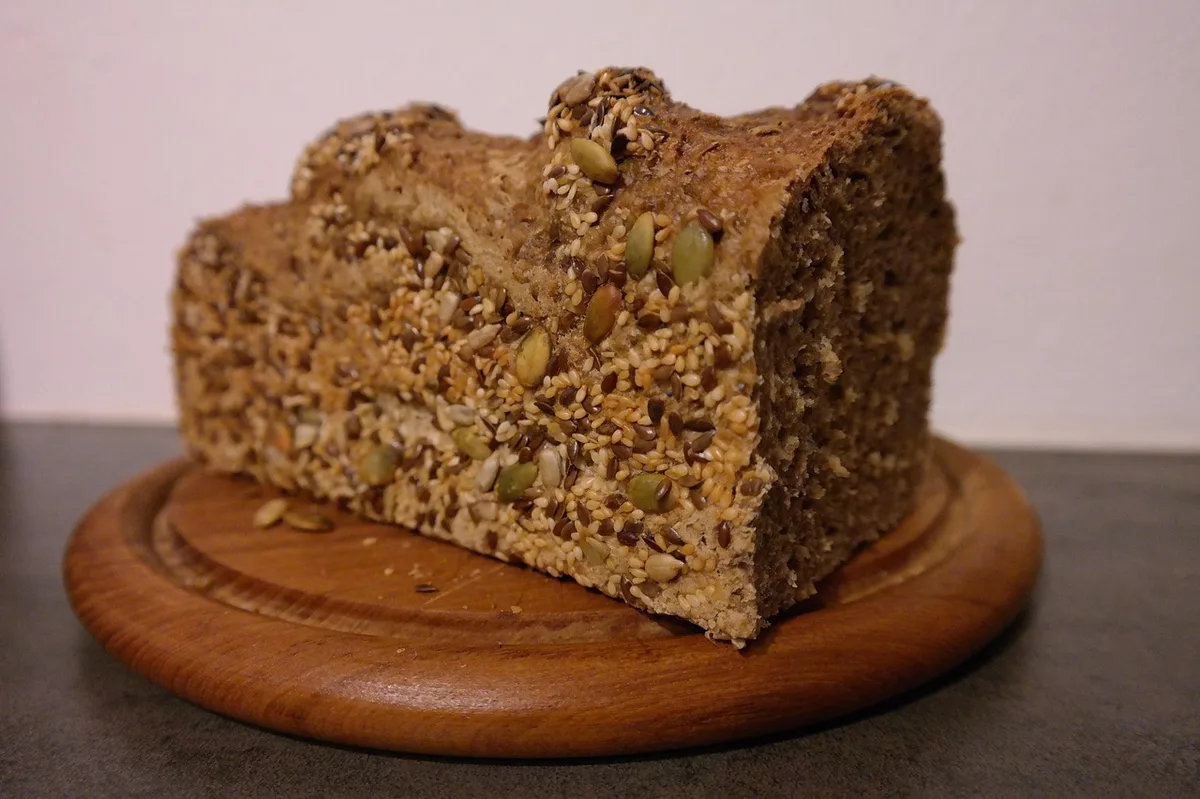
With white flour only the endosperm remains. Bran and germ are sifted out, of all things the two most nutrient rich parts. The numbers are clear: in white flour up to 80 percent of the nutrients that sit in the whole grain are missing. The minerals drop by up to 72 percent. Lost are magnesium, zinc, selenium, iron, vitamin E, the B vitamins and almost all the fiber. What remains is above all one thing: fast starch.
With that, what the seed can actually do tips over too. The fiber was the brake that let the sugar into the blood slowly. Without it the starch shoots up, the pancreas has to keep pace (more on this under Blood Sugar and Insulin Resistance). You keep the fuel and throw the brake and the tools away.
Why? Shelf life, not health
The reason is as simple as it is sobering. The oils in the germ turn rancid. A whole flour spoils within weeks if you do not keep it cool. Take the germ out and the flour keeps for months at room temperature, stays white, fine and always the same. For industry that is worth gold: long storage, uniform goods, no losses. The nutrient loss is the price paid not by them but by whoever eats it. You remove the living part because life spoils. What is dead keeps longer.
Enrichment: the giving back that is none
Because white flour is so empty, something is given back to it. “Enriched” then stands on the package. In practice that means: a few synthetic nutrients, mostly iron, folic acid and some B vitamins, are added. Historically this has prevented real deficiency diseases, that is honestly to be acknowledged. But it is not the same. Zinc, magnesium, selenium, vitamin E and the fiber do not come back, and the grown matrix of the grain least of all. First you take the whole package out, then you put three slips of paper back in and call it a gift.
The grain of wheat in the Bible
Hardly any food stands in Scripture as often as grain. Wheat and barley are among the seven kinds of the promised land (Deuteronomy 8:8). Bread is the epitome of daily provision. And Yehoshua calls himself “the bread of life” (John 6:35). The image is no coincidence.
It goes deepest just before the cross. Yehoshua says: “Unless a grain of wheat falls into the earth and dies, it remains alone; but if it dies, it bears much fruit” (John 12:24). He speaks of his own death and resurrection, and for that he reaches into the grain of wheat. The part that dies in the earth and rises anew is the germ. Exactly the part the mill sifts out. It can hardly be put more clearly: what is removed from the grain is precisely what carries the life.
Wisdom, not law
This is no rule never to touch a white roll again. In the New Covenant no food makes you more righteous and none makes you worse (Romans 14; 1 Timothy 4:4). It is an invitation, not a command. When you have the choice, take the whole grain: whole grain flour, best freshly milled, the whole cereal, the way it grew. Not out of fear, but because you understand what is in the grain. Eat the seed, not its remnant.
Scholarly basis among others: T&T Clark Handbook of Food in the Hebrew Bible and Ancient Israel (Bloomsbury 2022).
Further reading
The Seed: The Power in the Core
Ezekiel Bread: What Really Lies Behind It
Understanding Blood Sugar and Insulin Resistance