



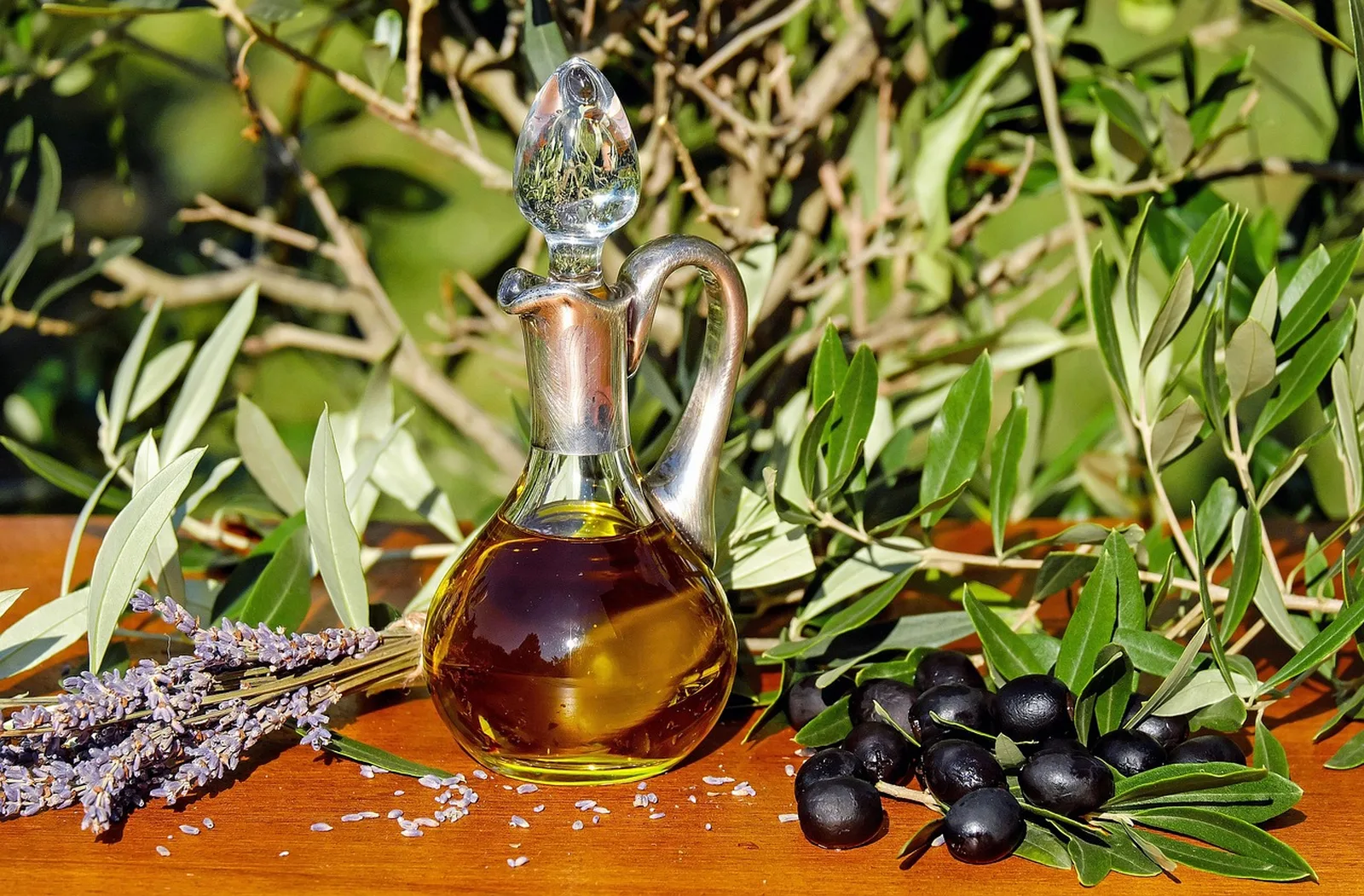
No other tree runs through the Bible as steadily as the olive tree. It is the first tree to emerge from the waters after the flood, and the last under which Jesus prays before his arrest. The olive tree is a sign, a raw material, an image for what carries, nourishes, and gives light.
The branch that announces the end of the flood
Noah opens the window of the ark and lets a dove fly. It returns, in its beak a fresh olive leaf (Genesis 8:11). In a world that a moment ago still stood under water, this green leaf is the first proof: life is returning. Ever since, the olive branch has been understood worldwide as a symbol of peace and new beginning. The same tree that will later supply anointing oil for kings and light for the sanctuary stands first again on the cleansed earth.
Anointing, light, holy service
Olive oil was the working substance of the temple. The priests anointed the altar, the vessels, and the officeholders with oil according to a fixed recipe (Exodus 30:22-33). Pure, beaten olive oil from the first pressing. The seven-armed lampstand in the sanctuary burned continuously with this oil (Exodus 27:20). Pure olive oil burns calmly and practically smoke-free, because it contains almost no volatile impurities. The temple needed light that does not distract. The olive tree supplied it.
Gethsemane: the garden whose name says everything
Gethsemane lies at the foot of the Mount of Olives. The name is Aramaic: Gat Schmanim, oil press. A functional designation, not poetry. In this garden stood olive trees, and among them the press in which the fruits were crushed to squeeze out the oil. It is exactly here that Jesus wrestles with the will of the Father on the night before his crucifixion (Matthew 26:38). The place where the olive under pressure gives up its most precious becomes the place where the Son of God completes his obedience. The image needs no commentary.
One of the seven kinds
In Deuteronomy 8:8, Moses describes the promised land with seven fruits: wheat, barley, wine, fig, pomegranate, olive oil, and honey (date syrup). Among these, the olive is the only one that is not a directly edible food. It supplies oil: fuel, preservation, care, light. A civilization without oil had, in the ancient Orient, no functioning kitchen and no lighting.
The Bible calls the promised land quite literally a “land of olive oil” (Deuteronomy 8:8). Oil was not only food but also the most important fuel for the lamps and the oil of anointing. And out of this anointing comes a great word: the anointed one is called in Hebrew maschiach, Messiah. Whoever speaks of oil thus brushes against the one who is “the anointed.”
Scholarly basis, among others: T&T Clark Handbook of Food in the Hebrew Bible and Ancient Israel (Bloomsbury 2022).
What makes good olive oil
Without marketing, without seals, without superlatives. What sets good olive oil apart from bad is simple.
Good olive oil is cold-pressed: the fruits are crushed and pressed, without heat, without chemical solvents. Fresh, cold-pressed oil tastes bitter and burns slightly in the throat. The bitterness comes from the polyphenols, natural protective substances that guard the oil against oxidation. A mild, neutral oil is either refined or old. The taste is not a defect, it is the mark of authenticity.
The fatty acid profile is predominantly monounsaturated (oleic acid). No magic: it is the composition that stays liquid at room temperature and is more stable when heated than many seed oils. Even in antiquity people knew: this oil does not go rancid so quickly. It keeps. It works.
No promises of healing. It is a food. A particularly old, particularly well-understood food.
Three uses, one substance
Kitchen: cold over bread, vegetables, and legumes, heated for frying and braising. In the biblical world the universal cooking fat.
Anointing: a person destined to become king or priest was poured over with oil, not a drop, a whole horn full (1 Samuel 16:13). Not a magical substance, but a visible sign of an invisible reality: set apart, empowered, sanctified.
Care: applied to the skin as protection against sun and wind, as massage oil, as a base for salves. The merciful Samaritan pours oil and wine into the wounds (Luke 10:34). Oil cleanses and closes the wound, wine disinfects. Not hospital equipment, but the best a traveler had at hand.
Creation logic: the tree that bears across generations
An olive tree needs time. First harvests after five to eight years. From about forty years on it stands in full yield. And then it bears, year after year, century after century. Olive trees on the Mount of Olives are estimated at over a thousand years old. Some still sprout after two thousand years. No fertilizing, no irrigation, no agrochemistry. The olive tree grows on barren soils and produces a fruit from which an oil is won that keeps for months without additive, without preservation, without a cold chain.
That is design: a fruit that brings along its own preservative (the polyphenols in the bitterness). An oil that burns clean. A tree that, once planted, supplies five generations and needs nothing but light, earth, and rain. Whoever plants an olive tree plants not for himself, he plants for his children and their children. That is creation logic in a single tree.
Wisdom, not law
The Bible commands no one to consume olive oil or to anoint himself with it. It narrates, describes, uses the olive tree as image and raw material. The Creator provides what is needed. Purely plant-based, minimally processed (pressing, no industrial process), versatile, keeping, spanning generations.
What the Bible offers is no prescription but an invitation: look. The olive tree has stood since the great flood. Its oil has anointed kings, lit temples, and cleansed wounds. This knowledge, grown over millennia, is worth more than the next oil study with thirty subjects and six weeks. The choice is yours.