



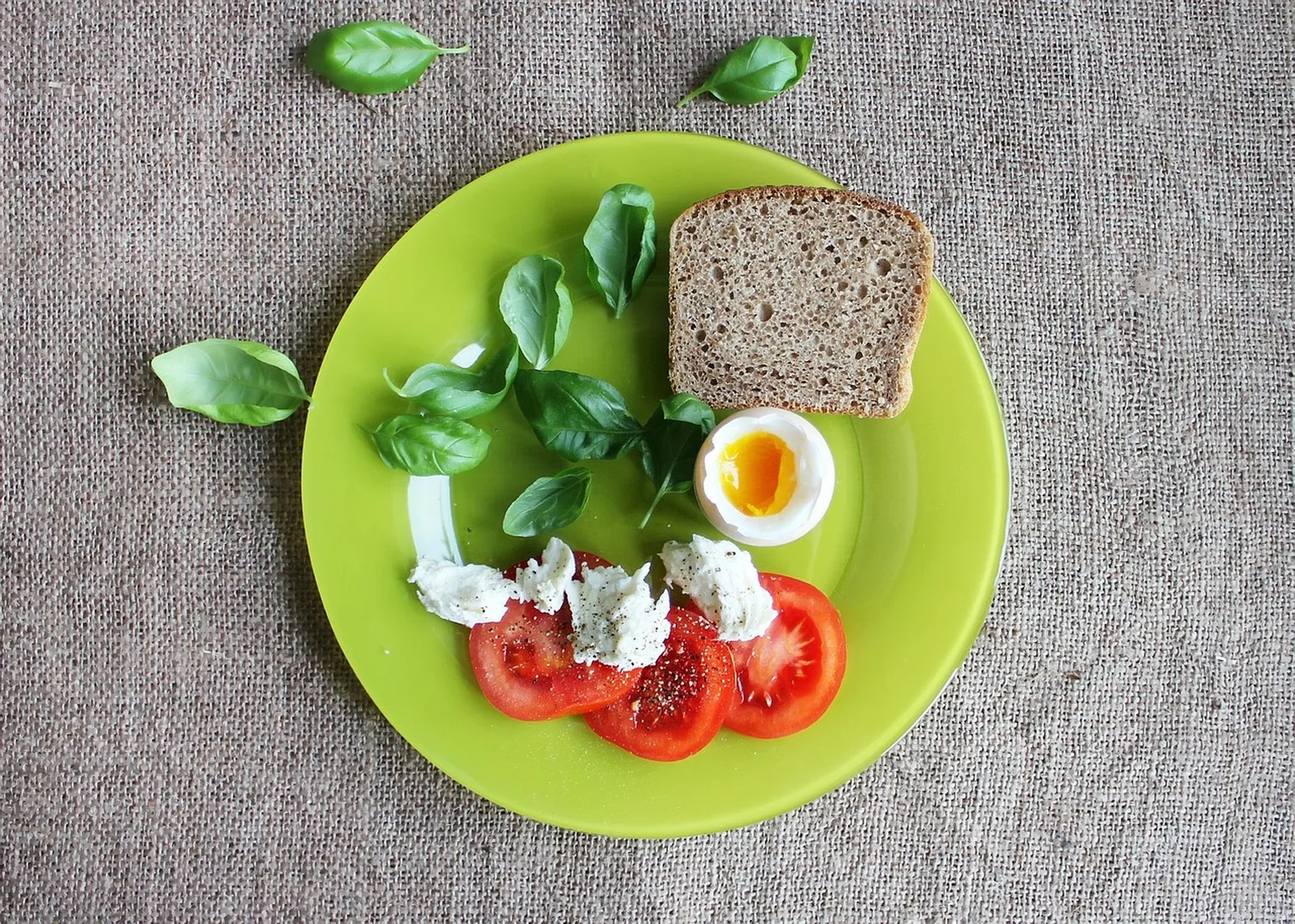
Before the factory, before the health claim, before the label, there was simply food. The oldest, plainest things were given whole and complete. This is the other side of “What Industry Strips Out”: not what was lost, but what was always there.
The simple was always enough
An egg, a loaf of bread, a spoonful of honey, some butter, a sip of water, a handful of lentils, a ripe fruit, a few green herbs. These things carried humanity through millennia, without a factory and without advertising. The clever thing about creation is not the complexity. It is that the simplest provision was already complete. Each of these foods is a small gift, complete in itself, needing nothing a laboratory could add.
The simple gifts
- The egg. A complete building kit, a surplus that costs no life.
- Bread and sourdough. Four ingredients and time, against a factory product shaped like bread.
- Honey. Providence from tiny creatures, and it never spoils.
- Butter and real fat. Cream and motion, where a factory invention was sold as healthy.
- Water. The drink you were built for, and the image of the living water.
- Legumes. The humble protein giant that even fertilizes the soil.
- Fruit. The only food that wants to be eaten.
- Vegetables and herbs. The green herb from the very first sentence about food.
Two sides of the same truth
This strand belongs together with its counterpart. On one side stands what industry strips out, the best part, quietly removed and sold as progress. On this side stands what was given from the beginning, whole and enough. It is the same truth from two sides, and in both cases the same holds: it can all be proven, it’s just that no one looks. That is exactly the invitation, to look.
Wisdom, not law
No list of bans and no new purity law (Romans 14; 1 Timothy 4:4). It is an invitation to eat closer to the way it was given: whole, fresh, simple. Not out of fear, but because in the simple lies the fullness that no one needs to rebuild. Eat the way you’re built, and eat it the way it grew.