



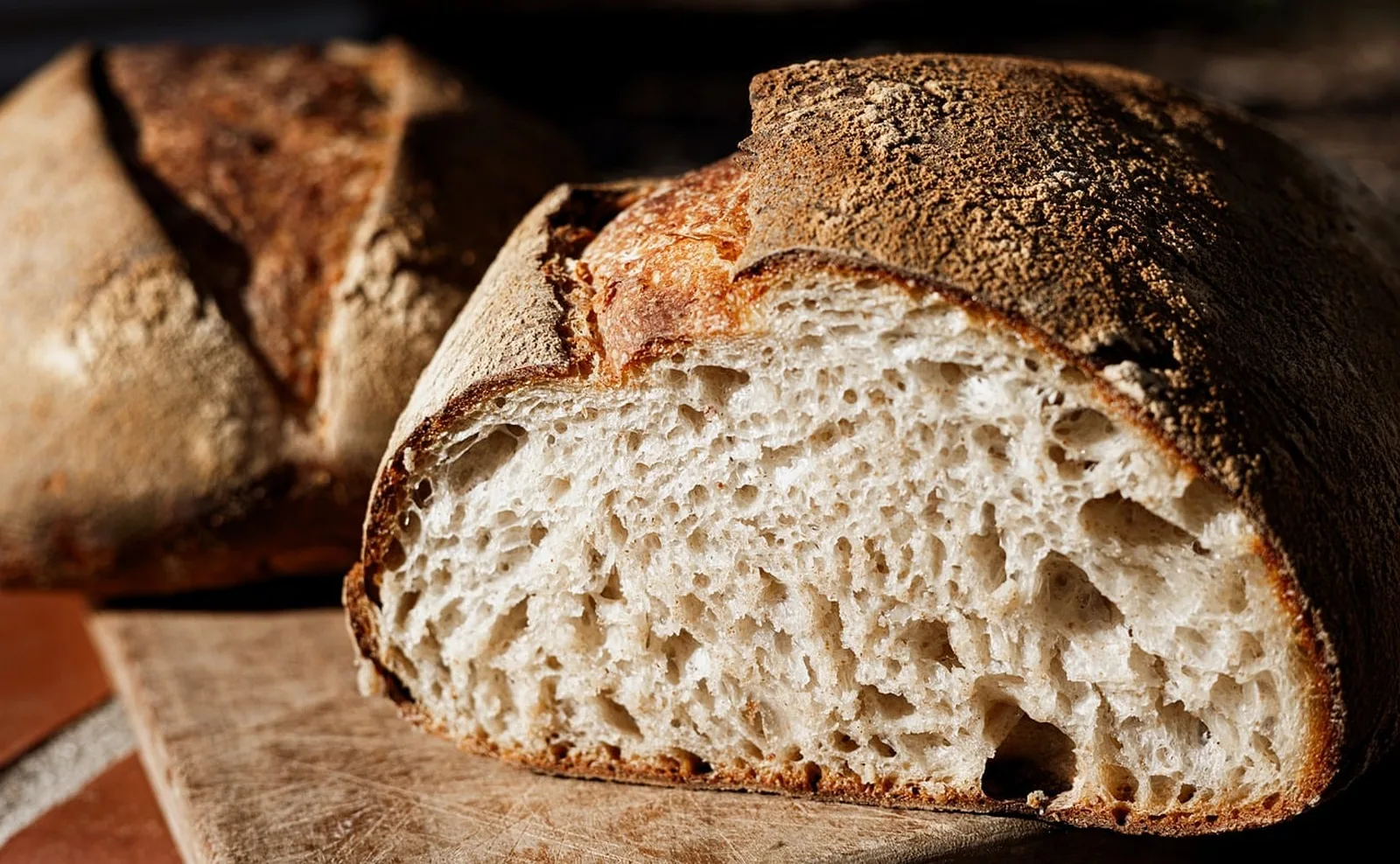
Bread is the oldest staple food, the very symbol of daily nourishment. And real bread needs only four things: flour, water, salt and time. What the modern factory makes of it shows, like almost nothing else, how far we have drifted from the simple.
Real bread: four ingredients and time
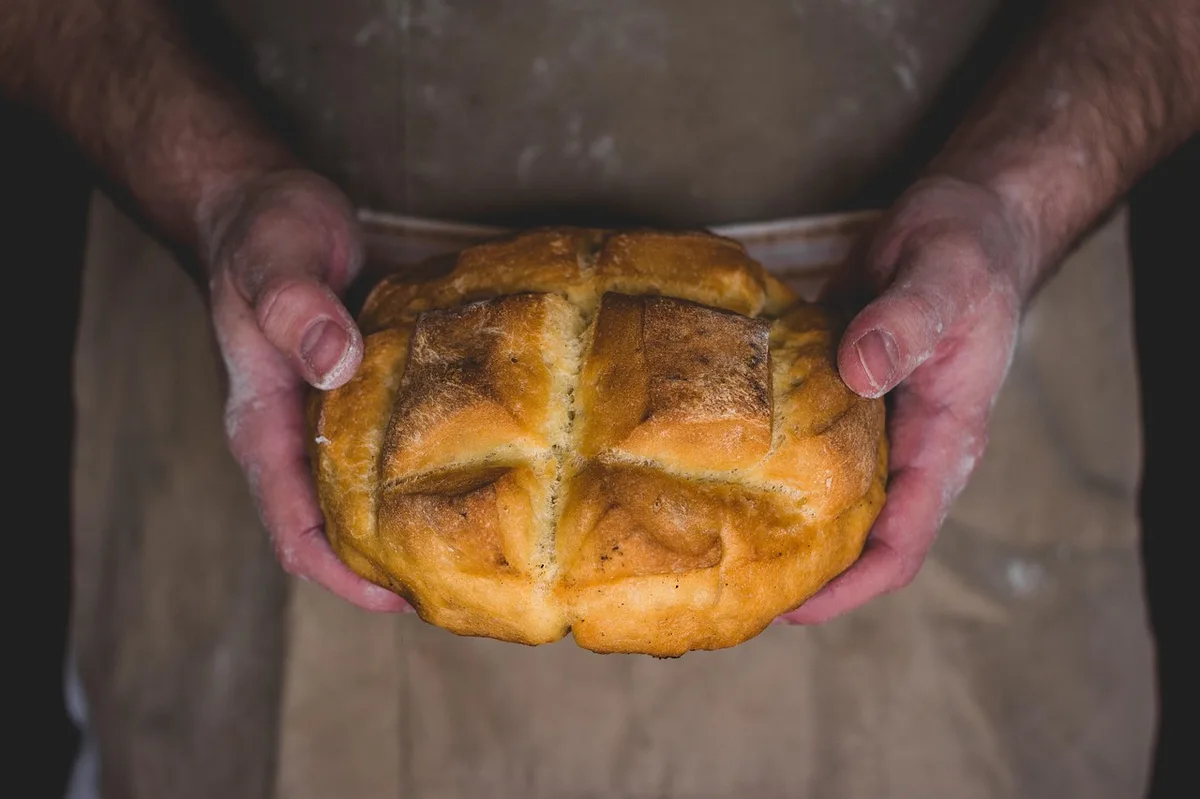
Proper bread is made of whole grain flour, water, salt and a wild sourdough, that is, a natural leaven of wild yeasts and lactic acid bacteria. The fourth ingredient no one can shortcut: time. The sourdough ferments slowly, over hours, up to a whole day. In that time the decisive part happens. For thousands of years bread was simply made this way, in every household, with the sourdough passed on from one baking to the next.
What the long fermentation does
The slow fermentation is not romance, it is chemistry. The lactic acid bacteria break down the phytic acid, with a long sourdough process by up to 90 percent, compared to under 30 percent in quick yeast bread. That matters, because otherwise the phytic acid binds the minerals. Only once it is broken down can the body truly use magnesium and phosphorus. The long fermentation also breaks down part of the gluten, which makes the bread easier on many people. And the acids that form lower the glycemic index, so the bread raises blood sugar more gently. The old, slow way was not inefficient. It was wisdom held inside the time.
The factory has no time
Industrial bread cannot wait. The Chorleywood process, widespread since 1961, turns flour into a sliced, packaged loaf in about three and a half hours: with far more yeast, with high speed mixers and with a list of additives so that even cheaper, low protein flour will work. None of the slow chemistry happens here. What comes out is airy, uniform, cheap, and robbed of exactly the benefits the fermentation would have given.
What is really in it
And now it gets unappetizing. The astonishing thing: it is all provable, it is just that nobody looks.
- The dough conditioner L-cysteine (E920). A substance obtained from feathers, pig bristles or, historically, from human hair, collected in barber shops and dissolved in hydrochloric acid, mainly in China. In the EU only feathers and bristles are permitted, and companies are increasingly switching to fermentation. But the substance in many soft rolls has exactly this origin. It appears on the label as E920 or L-cysteine.
- Enzymes and processing aids. Phospholipase, fungal amylase, a known trigger of baker’s asthma, transglutaminase and more. The bitter part: many of them do not even have to appear on the ingredient list.
- The healthy look out of the color can. Many brown, hearty looking, multigrain seeming loaves are mainly white flour, colored with caramel coloring (E150) or malt syrup so they look dark and wholesome. The color sells a health the flour does not have.
None of this is secret. It is on the labels, in the regulations, in the trade literature. Provable. It simply counts on nobody reading.
Bread in the Bible
Hardly any word appears as often in Scripture as bread, the very image of daily provision. “Give us this day our daily bread” (Matthew 6:11). Yehoshua calls himself “the bread of life” (John 6:35). And one detail fits exactly here: the bread of the Bible was leavened with natural sourdough, the wild leaven every household kept going, or baked unleavened for Passover. There was no turbo yeast, no L-cysteine, no caramel coloring. Bread was flour, water, salt, fire and time. The daily gift was simple.
Archaeologically too, grain was the staple food above all others. Two grains dominated: wheat and barley, with wheat considered the finer of the two and barley the harder, more frugal grain of ordinary people. Grinding was done daily by hand between two stones, fresh for the daily bread. Exactly the fresh, whole milling that white flour later gave up.
Wisdom, not law
No rule, no fear, no guilt over a bread roll (Romans 14; 1 Timothy 4:4). Just a clear eye. If you can, take real bread: sourdough from the whole grain, few ingredients, from a baker who gives it time, or bake it yourself, it is four ingredients. Read the label. If it lists things you cannot pronounce, it is no longer bread but a factory product in the shape of bread. Simple, whole, made with time.
Scholarly basis among others: T&T Clark Handbook of Food in the Hebrew Bible and Ancient Israel (Bloomsbury 2022).
Further reading
The Egg: A Complete Building Kit, Simply Given
The Whole Grain: Why White Flour Loses the Germ
What Industry Strips Out