



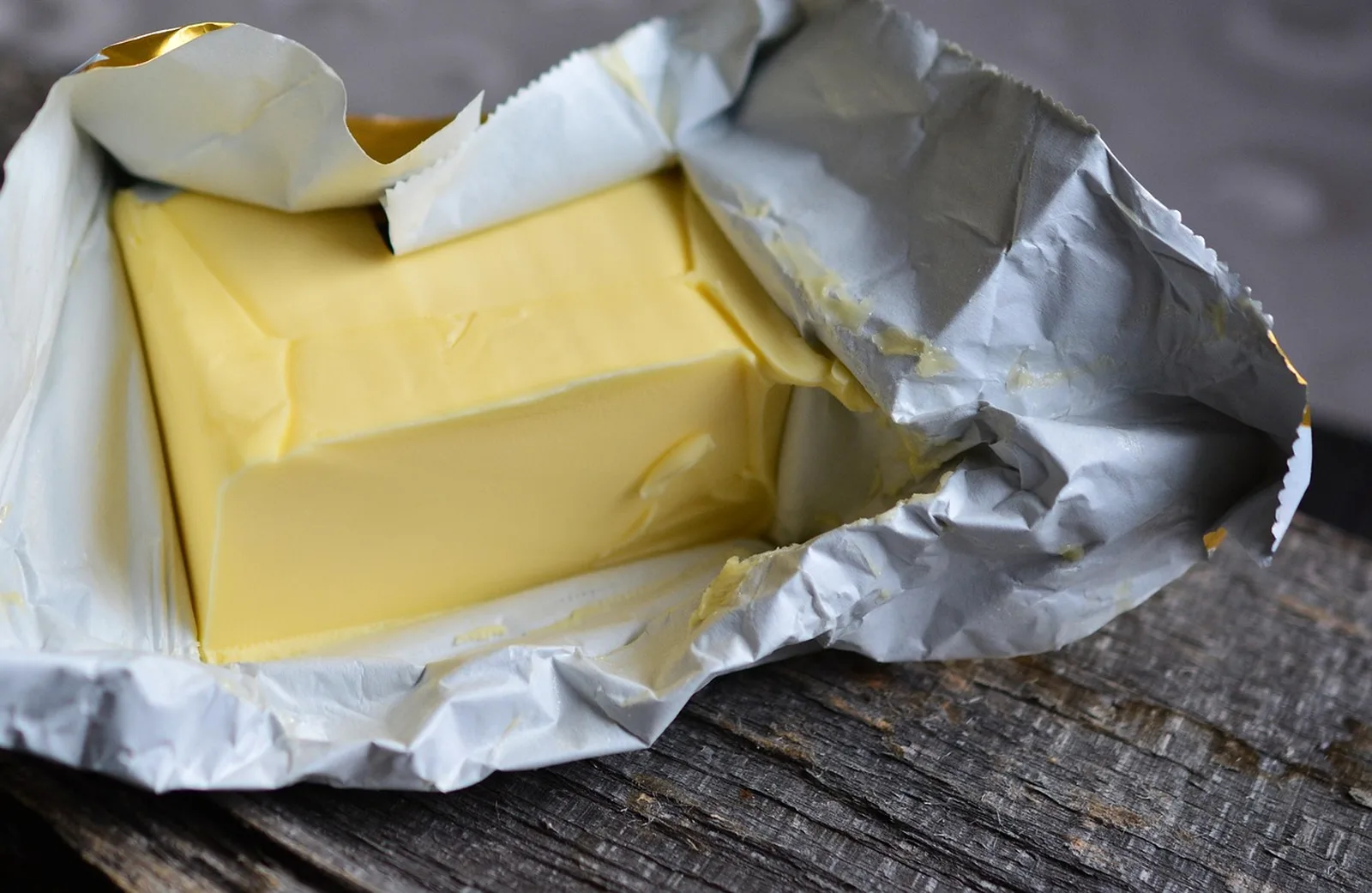
Butter is one of the oldest foods, just cream, motion and a little time. For decades it was declared the villain, while a factory invention was sold as the healthy choice. That story had everything exactly backwards.
Butter: cream, motion, time
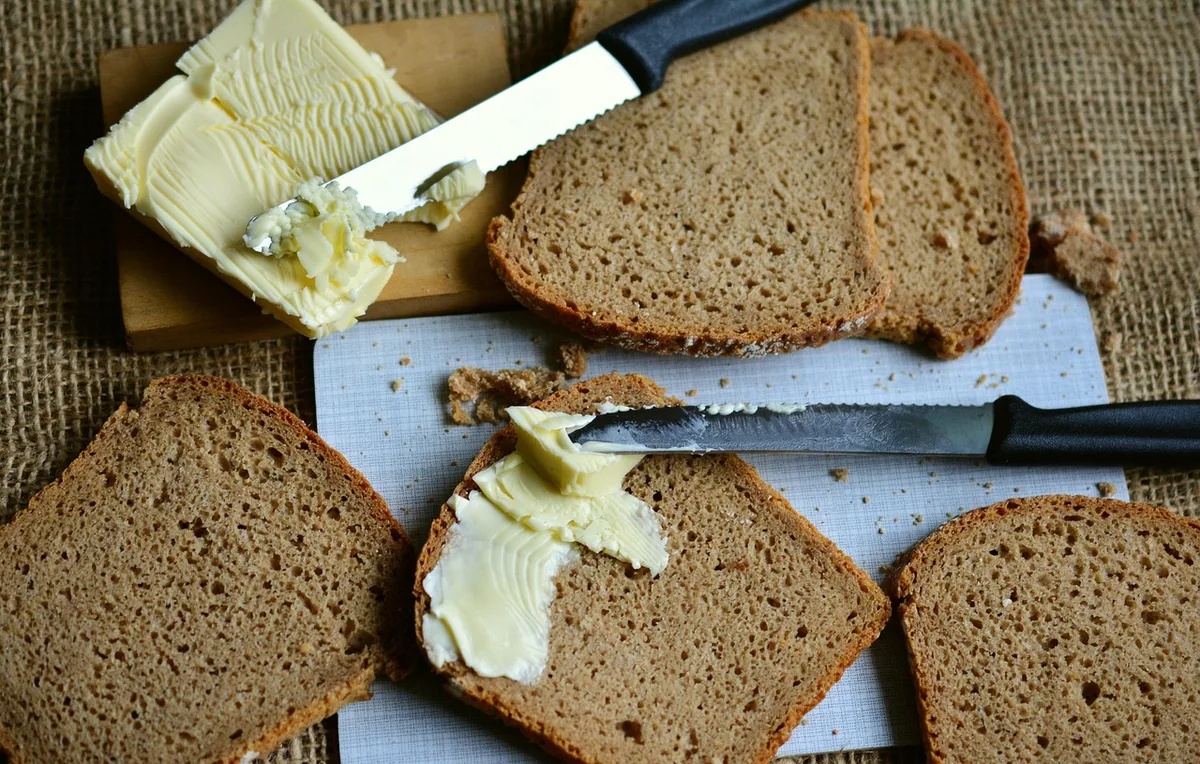
Butter is simply cream, churned until the fat clumps together, with a pinch of salt. Nothing else. People have made it for at least four thousand years, in every culture that kept livestock. The Bible knows it: Abraham sets curds and butter before his guests (Genesis 18:8), and butter and honey are an image of good provision (Isaiah 7:15). An old proverb even describes the making: churning milk brings forth butter (Proverbs 30:33). Plain and whole, from the animal to the table with a butter churn.
The invention of the substitute
In 1869, a French chemist invented margarine, prompted by a competition of Napoleon III to create a cheap butter substitute for the army and the poor. Around 1910, hardening was added, the same process as with Crisco, which made liquid vegetable oil spreadable and produced the first man-made fats: the trans fats. Margarine was naturally whitish and unappetizing, so it was dyed yellow to look like butter. The imitation was so obvious that the dairy industry struck back with laws: in some places, margarine had to be sold dyed pink, so that no one would mistake it for the real thing.
The great twist: the fake sold as healthy
Then came the turn. From the 1980s on, saturated fat, and butter with it, was declared the villain of heart disease. Margarine made from vegetable oil was advertised as the heart-healthy choice, backed by guidelines and advertising. The problem: exactly this margarine was full of trans fats, and those, as we know today, are truly harmful to the heart, more harmful than almost anything else on the plate. For decades, people dutifully swapped butter for the one fat that actually did damage. In 2015, the authorities finally declared partially hydrogenated oils no longer safe, and by 2018 they were banned. The healthy choice was the dangerous one. Provable, and it lay in the open the whole time.
And saturated fat?
Here we stay honest, because we do not build simple villains. The blanket claim that saturated fat causes heart disease has not held up well. Newer large reviews find no clear link between saturated fat and heart disease and thus contradict the old fat-heart hypothesis. That does not mean eating butter without limit, the research is still in discussion, and it is the whole diet that counts. But it does mean: the confident demonizing of a simple, ancient food was overblown, while the factory substitute was quietly the harmful one.
Fat in the Bible
Remarkable: the Bible treats fat as the best part, not as the enemy. Fat stood for wealth and abundance, the fat of the land (Genesis 45:18). In the offerings of the Old Covenant, the fat was presented to God as the noblest portion (Leviticus 3:16). Butter and honey, cream and oil were signs of a good land and a blessed table. In Scripture, fat was never the villain. It was the fullness of the gift.
Wisdom, not law
No rule, no fear (Romans 14). If you use fat, take the simple, whole ones: real butter, best from pasture-raised cows, good cold-pressed olive oil, instead of industrial spreads and refined seed oils (more on this under industrial vegetable oils). Read the label. If it took a factory to make your fat spreadable, it is not the fat your body knows. Simple, whole, the way it has been churned and pressed for thousands of years.
Further reading
Canola Was Lamp Oil: The Truth About Modern Vegetable Oils
Honey: Providence That Never Spoils
Milk: A Growth Program for Calves, Honestly Considered