



Part 1: What a nutrition figure really says and where its limits are
You know the picture: a table, neatly arranged in columns, with milligrams and percentages that tell you exactly what is in your food. A reassuring certainty. Only, sadly, a deceptive one. The number on the package is a laboratory value. It says what was in the sample when someone measured it. It does not say what arrives in your body. Between these two things gapes an abyss that no table closes.
Bioavailability: contained is not the same as absorbed
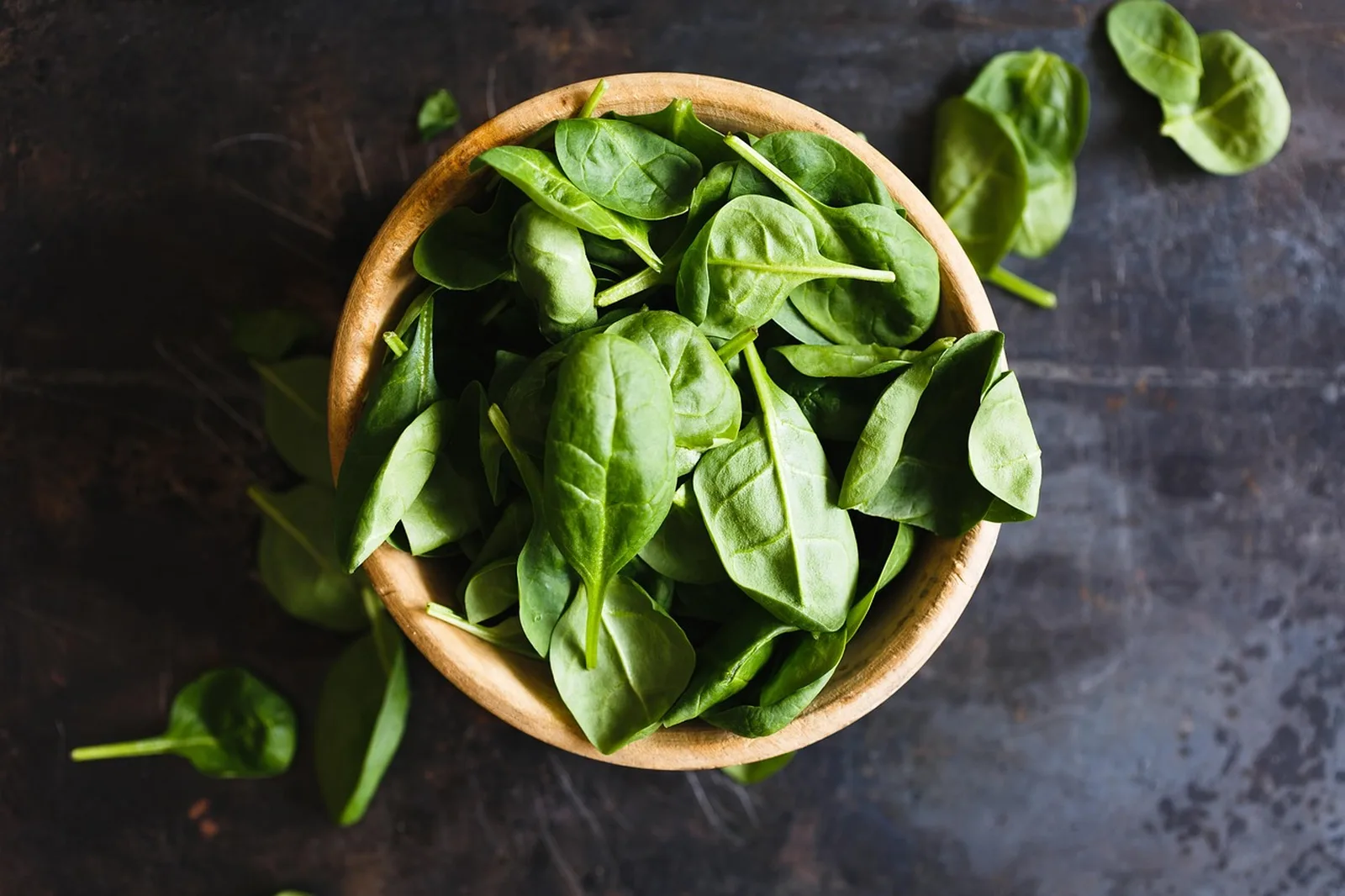
Spinach contains iron, says the table. What it does not say: spinach also contains oxalic acid, and it binds the iron so tightly that your gut can hardly release it. You may actually absorb 2 to 5 percent of the measured iron. Lycopene from raw tomatoes largely passes you by; from cooked tomatoes with a little fat you absorb many times more. The same substance, the same table figure, completely different effect. Bioavailability depends on the chemical form, on accompanying substances that inhibit or enhance, and on preparation. The table knows no difference between raw and cooked, between isolated and embedded.
The food matrix: the whole is more than the sum of its parts
An apple does not consist of 12 g of sugar plus 2 g of fiber plus 5 mg of vitamin C, neatly separated and individually retrievable. It consists of a complex matrix: cell walls, fibers, water, hundreds of secondary plant compounds working together. Your body does not digest a table, it digests a three-dimensional structure whose architecture determines how fast sugar enters the blood and which enzymes get access. Isolated nutrients behave fundamentally differently from the same substances in their natural context. That is why a calorie from an apple does something different than a calorie from apple juice, even though the table shows identical amounts of sugar.
Individual differences: your table, my body
Even if two people eat exactly the same thing, they do not absorb the same thing. Your gut flora, your age, your metabolism, even the time of day influence absorption. A young person with intact stomach acid draws more minerals than someone with reduced acid production. The table calculates with an average that does not exist in reality.
Measurement errors and fluctuations: the illusion of precision
One carrot is not the same as another carrot. The beta-carotene content varies by variety, soil, rainfall and storage time. Between an intensively irrigated sand-grown carrot and a dry-grown loam carrot lie worlds. The table gives a mean value, often from a single measurement series, and pretends it applies universally. On top of that come the methodological tolerances of the analytical procedures. The decimal place on the label suggests a precision that does not exist.
RDA and daily requirement: a political average
The recommended daily allowance (RDA) is not a constant of nature. It is a political determination, born from a committee that had to find a value protecting 97 to 98 percent of the population from deficiency. Deficiency, not optimal supply. The value was designed for mass provision, for public health. It says nothing about your personal requirement. Your actual need depends on activity, stress, individual biochemistry. A competitive athlete has a different magnesium requirement than an office worker. The RDA smooths all of that into one number that is supposed to be enough for almost everyone and therefore fits almost no one exactly.
Part 2: Exposing invented and misleading terms
ORAC: the antioxidant value that officially no longer exists
In 2012 the US Department of Agriculture (USDA) withdrew its ORAC database. The reason: ORAC values (Oxygen Radical Absorbance Capacity) have no proven relevance for human health. What captures radicals in a test tube does not necessarily do so in the body. Nevertheless, you still see ORAC values on products and in rankings. The industry loves the number because it translates into marketing: higher value equals healthier. The USDA itself has buried this logic. ORAC is a laboratory curiosity, not a health indicator.
Superfood: a term without a definition
Superfood is not a protected, not a scientific, not a legal term. There is no authority that checks whether a goji berry is super. Since 2007 the EU has regulated health-related claims with the Health Claims Regulation, and that is exactly why most superfood products say nothing concrete that could be legally challenged. The term itself is a marketing shell: empty, but shiny. Local kale beats most imported superfoods in nutrient density and costs a fraction. But kale does not sound like a superfood. That is the whole trick.
Nutri-Score: when the traffic-light system punishes the wrong ones
The Nutri-Score offsets favorable and unfavorable nutritional components according to an algorithm. Sounds reasonable, but leads to curious results. Olive oil, the heart of Mediterranean cooking, long received only a C, and since the 2023 reform usually a B. Both worse than this oil deserves. Why? Because the algorithm punishes fat across the board, without distinguishing between high-quality olive oil and industrially hardened fat. Nuts, a staple food thousands of years old, are also rated as mediocre. Highly processed products, on the other hand, can polish up their score with added fibers and sweeteners, even though they are nutritionally worthless. The Nutri-Score punishes the traditional and rewards the cleverly formulated.
Alkaline healing: a myth your body refutes
Your body regulates its pH with a precision that no alkaline breakfast can override. Blood has a pH of about 7.4. If it deviates by more than 0.05, you become very sick very quickly. Lungs and kidneys work around the clock to hold this value, completely independent of whether you eat lemons or drink alkaline water. That urine pH can fluctuate with diet is precisely the proof that the body excretes excess acids rather than storing them. An alkaline diet as a cure is a modern theory without solid evidence. Your body is smarter than a pH test strip.
A calorie is a calorie: the simplest of all nutrition lies
Physically it is true: a kilocalorie is the amount of energy that warms one gram of water by one degree. Biologically it is not true. 100 kilocalories from almonds pass through your body completely differently than 100 kilocalories from cola. The almond calories are embedded in a fiber-rich matrix, are released slowly, are partly not broken down at all, and part of the energy is consumed by digestion itself. The cola calories flood your bloodstream in minutes. The thermic effect differs massively: protein costs the body up to 30 percent of its energy just for metabolizing, fat barely 3 percent. The calorie number on the package ignores all of that. It pretends your body is a simple furnace. It is not.
Our conclusion: honest tables, honestly explained
We will build nutrition tables on bible-diet. Because they are useful as orientation, as a benchmark, as a starting point. But we will always say what they are worth and what they are not. A table is a tool whose limits you have to know. The number on the paper does not guarantee what arrives in your body. The term on the package does not guarantee what it promises. Knowing that makes you mature. Understand your own food yourself, do not outsource it to a table. The table is the beginning, not the end.
Related: The Seed: Power in the Kernel